Author: PUTO.lv

It is well known that during the winter season both drivers, pedestrians, and other road users must be especially cautious. However, even when winter is already well underway, it is never unnecessary to repeat the basic principles of safe driving, as weather conditions and road surfaces can change very rapidly.
In winter conditions, details become crucial – tire condition, visibility, driving style, and vehicle cleanliness. Therefore, we have compiled the most important information about safe driving in winter, supplementing it with practical and everyday useful tips.
1. Preparing Your Vehicle for Winter
Safe winter driving starts even before setting off – with a properly prepared vehicle.
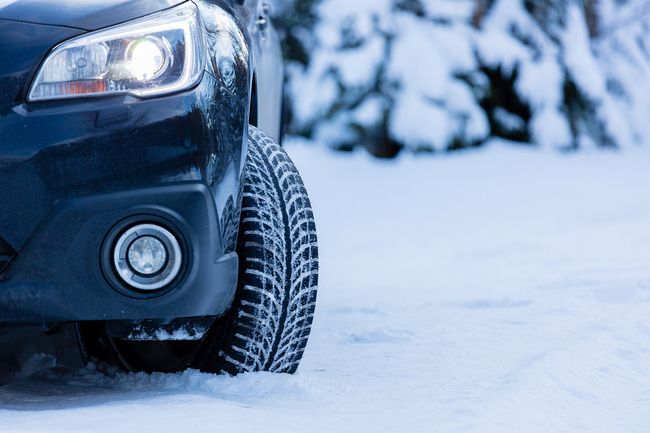
Winter tires
The tread depth of winter tires must be at least 4 mm to ensure sufficient grip on snowy or slippery roads. Studded tires provide better traction on ice, while regular winter tires perform better on wet or snowy roads.
Studded tires are permitted in Latvia from October 1 to May 1, while winter tires are mandatory from December 1 to March 1. It is equally important to regularly check tire pressure, as it can decrease in low temperatures, affecting vehicle handling.
Battery condition
In winter, the battery is one of the most sensitive vehicle components – low temperatures reduce its capacity, which can make starting the car more difficult. Therefore, it is especially important to regularly check the battery condition and assess its performance in time. If the battery is older than 4–5 years, it is advisable to consider replacing it before the winter season.
Tip: If you drive infrequently, you should occasionally start the car and take a longer drive so the battery can fully recharge. In winter, it is also useful to keep jumper cables or a portable starter in the car for unexpected situations.
Fluids and fuel
In winter, both winter-grade coolant and winter windshield washer fluid that does not freeze at low temperatures should be used.
Tip: Keep the fuel tank at least half full. This helps prevent the fuel system from freezing and ensures a fuel reserve in unexpected situations. This is especially important for diesel vehicles.
2. Driving Style in Winter Conditions
In winter, driving style should be adapted not to the permitted speed, but to the actual road conditions.
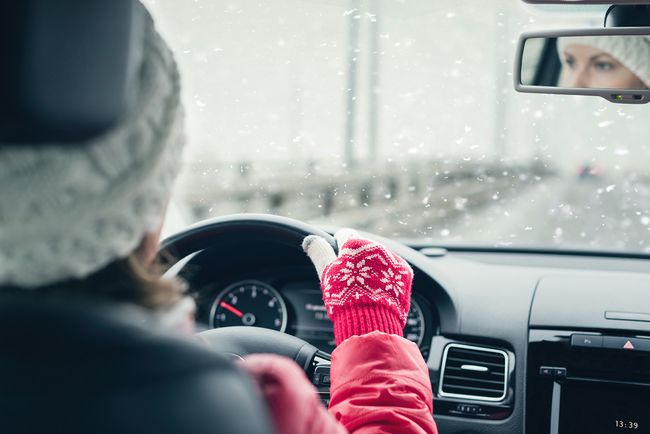
Speed and distance
Even if the permitted speed is higher, it is recommended to drive more slowly in slippery conditions. On icy or snowy roads, braking distance is significantly longer, so a greater distance from other vehicles should be maintained and braking should be done in advance.
Particularly dangerous areas are bridges and overpasses, which ice up faster than the rest of the road. Also, at air temperatures around 0 °C, black ice can form – a transparent layer of ice that is almost invisible and extremely dangerous.
Vehicle drivetrain and skidding
It is important to know what type of drivetrain your vehicle has – front-wheel drive, rear-wheel drive, or all-wheel drive.
Tip: If the car starts to skid, it is important to stay calm, keep both hands on the steering wheel, and never brake sharply. Keep in mind:
- If the car is equipped with ABS, the system will modulate braking automatically.
- For front-wheel drive – turn the steering wheel in the direction of the skid and gently apply the accelerator.
- For rear-wheel drive – turn the steering wheel in the direction of the skid and release the accelerator.
Avoid sudden maneuvers
In winter, sudden lane changes and sharp movements can lead to loss of control.
Tip: Do not change lanes just because one appears to be moving faster. If there is no need to make a turn, it is safer to stay in your lane.
Practice safe driving
To better understand how your car behaves on a slippery surface, it is recommended to practice braking and steering in a safe place (for example, an empty parking lot). If confidence is lacking, it is worth considering safe driving courses.
3. Vehicle Cleanliness in Winter
In winter, vehicle cleanliness is directly related to safety.
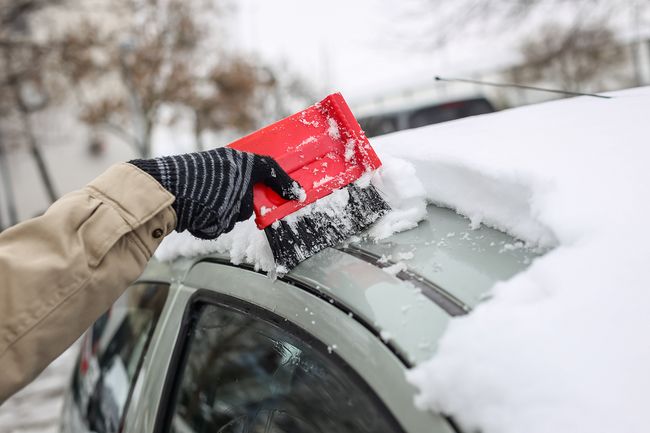
Snow on the vehicle roof
Snow must be removed from the vehicle roof. When it warms up, it can slide onto the windshield or fall onto other vehicles, creating dangerous situations. There may also be a fine for driving with snow left on the roof.
Regular cleaning
Whether you choose touchless self-service washing or a quick Express wash, the key is regularity, especially during the winter season. Always thoroughly clean windows and mirrors, headlights, and the bodywork.
Dirty or salt-covered headlights can reduce light output by as much as 30–40%, significantly impairing visibility.
Tip: Include headlight cleaning in your daily routine – not only before long trips.
Read more about vehicle cleanliness in winter in our article: Car washing in winter - Practical Tips and Advice.
4. Visibility – a Crucial Safety Factor
In winter, there are fewer daylight hours, and roads are more often covered with wet snow, salt, and other road debris, making good visibility especially important. A dirty windshield or worn wiper blades can significantly hinder the assessment of situations on the road.
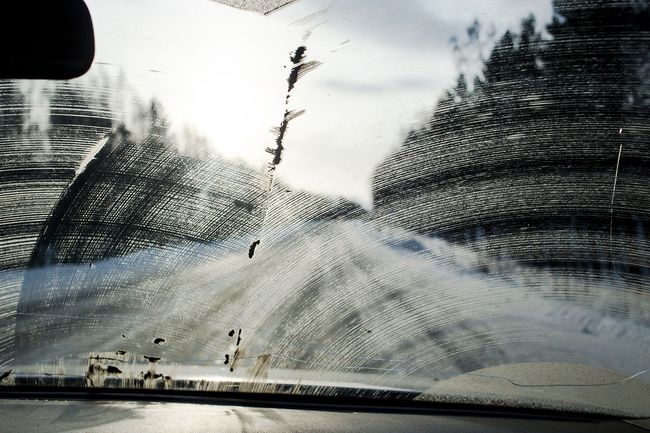
Windshield and wiper blades
Winter windshield washer fluid helps effectively remove salt and dirt, so it is important to take care of it in time and use washer fluid designed for cold weather. At several of our car washes, winter windshield washer fluid refill is also available – you can refill exactly as much as you need!
Tip: In winter, it is recommended to replace wiper blades – snow and ice increase their load, and worn blades significantly reduce visibility.
Pedestrians and reflectors
At dusk and in the dark, pedestrians and cyclists can appear seemingly “out of nowhere,” especially if they do not use reflectors.
Tip: Reduce speed before all pedestrian crossings – even if it seems that no one is there.
Important! A pedestrian without reflectors is usually noticed by a driver only at a distance of 25–40 meters. At a speed of 90 km/h, this distance is covered in 1–2 seconds – insufficient time for a safe maneuver. Reflectors increase visibility by 5–10 times, giving the driver time to react and avoid an accident.
5. Other Useful Tips for Safe Winter Driving
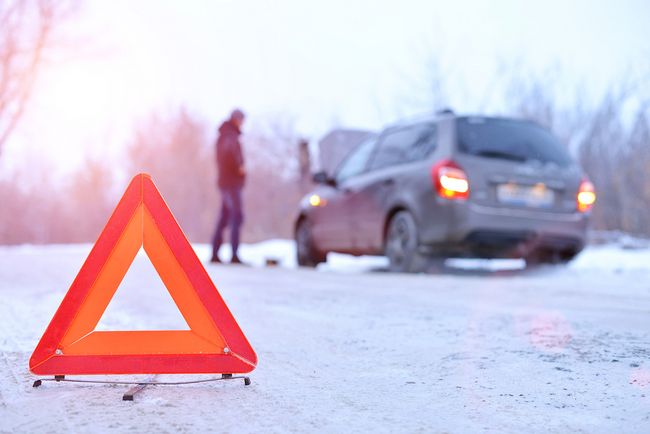
In winter, it is recommended to keep an emergency kit in the car, which can be very useful:
- a snow shovel,
- an ice scraper and brush,
- a flashlight with spare batteries,
- a tow rope and jumper cables,
- warm clothing and a reflective vest,
- some snacks with a long shelf life, in case you end up spending several hours on the road.
These small items can be crucial in difficult situations on the road.
Safe winter driving is not just about following rules – it is a conscious attitude toward yourself and other road users. A properly prepared vehicle, an adapted driving style, good visibility, and regular vehicle cleaning can be decisive factors in making winter roads safe.
Remember – in winter, safety is always more important than haste. Take care of your vehicle, and it will take care of you!